
The bass clef is used for the lower notes in music: cello, double bass, trombone, bassoon, tuba, bass guitar and the left hand on the piano. Lots of learners who are happy with the treble clef find the bass clef confusing at first, because the notes sit in different places. The good news is that the same tricks work for both. New to reading music? Start with our treble clef guide.
01The lines
Reading from the bottom line to the top, the five lines of the bass clef are G, B, D, F and A.
Great Britain Doesn't Fight America
02The spaces
The four spaces between the lines, again from the bottom, are A, C, E and G.
All Cows Eat Grass
03Three landmark notes
Instead of learning every note at once, learn three notes really well and work the rest out from them. In Stave Attack these are the bass clef landmarks:
- G on the bottom line. The first word of Great Britain, and the lowest line of the stave.
- F on the fourth line. The bass clef is also called the F clef. Its two dots sit either side of the F line, so the clef itself points to F.
- Middle C, just above the stave. It sits on its own short line (a ledger line) above the top line. It's the same note as middle C in the treble clef, right in the middle of the piano.
04Counting from a landmark
Musical notes use just seven letters: A B C D E F G. Each step up the stave, from a line to the next space or from a space to the next line, moves one letter forwards. Each step down moves one letter backwards.
- Going up? Count forwards through the alphabet. One step above the F line is G. Two steps up is A.
- Going down? Count backwards. One step below the F line is E. Two steps down is D.
- After G, start again at A. So one step above G on the bottom line is A.
With three landmarks spread across the stave, no note is ever more than a couple of steps from one you already know.
05A five-minute practice routine
- One minute: say the lines and spaces out loud, bottom to top, then top to bottom.
- One minute: find the three landmarks in a piece of music you're learning. Point at every G, F and middle C.
- Two minutes: pick any other note and count to it from the nearest landmark. Speed comes later.
- One minute: play a quick note-naming game and try to beat yesterday's score.
Little and often beats long sessions. Five minutes a day for two weeks will do more than an hour once a week.
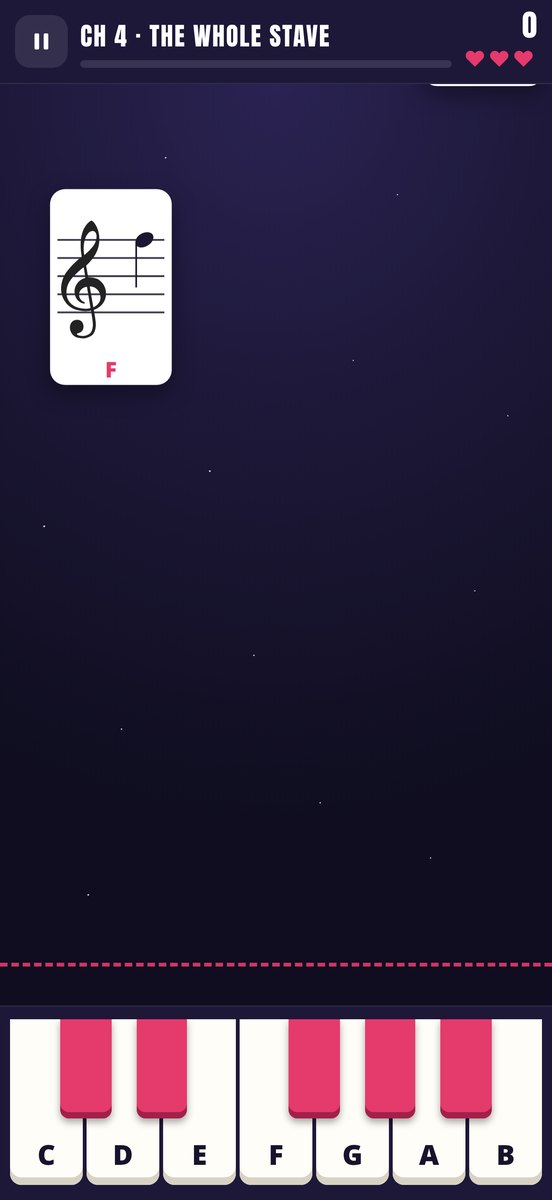
Practise with Stave Attack
Stave Attack teaches the bass clef in exactly this way: the F clef first, then counting from landmarks, then the whole stave, ledger lines, sharps and flats. Free to start on iPhone and iPad, with no adverts.
Music teacher? Get the full version of Stave Attack free to try with your pupils.